
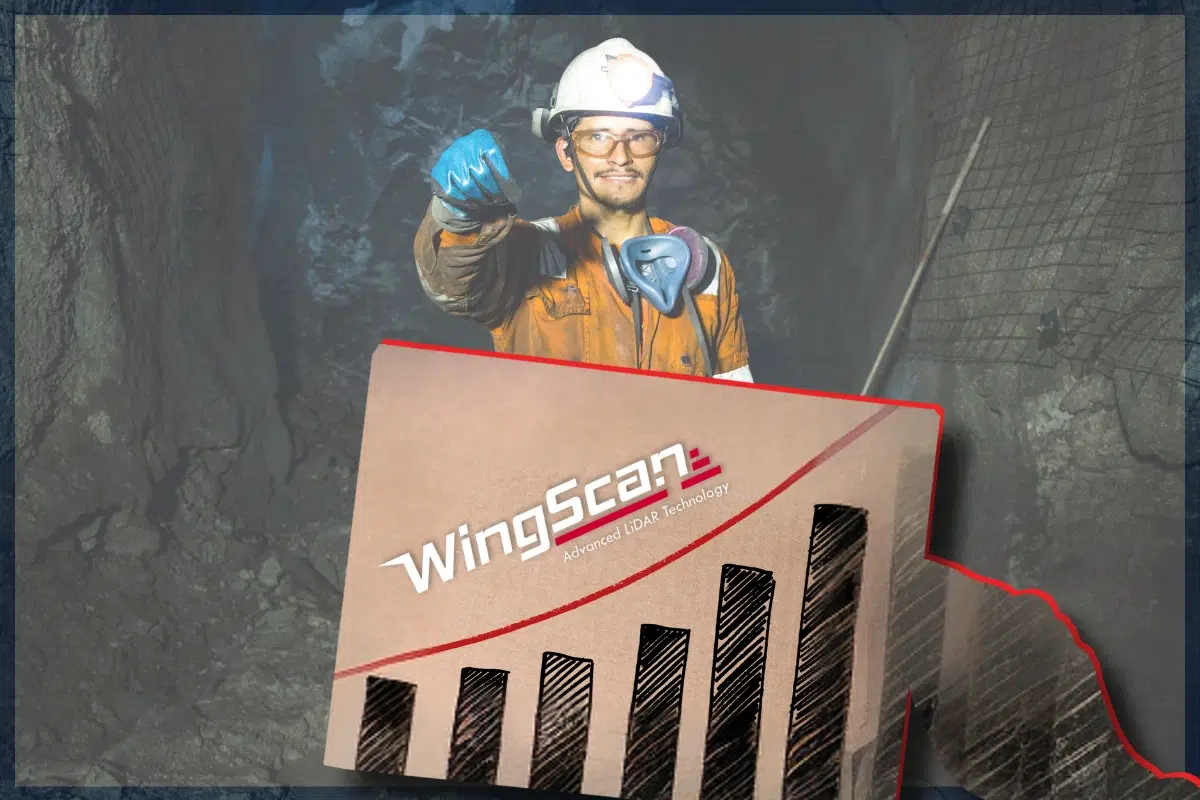
Mining measurement and ROI
How a Mining Volumetric Scanner Turns Better Measurement Into ROI
Mining measurement should make production clearer—not create another bottleneck. When a critical measurement point requires frequent calibration, manual checks, or downtime, the true cost reaches far beyond the instrument itself. Production slows, decisions are delayed, and small measurement gaps become larger reconciliation problems.
Volumetric scanning adds continuous, non-contact measurement where faster visibility can make a difference. A mining volume scanner helps teams see material flow, load shape, fill level, and carryback while the material is still moving, giving operations time to respond before a small issue becomes an expensive pattern.
The strongest WingScan ROI comes from three connected improvements: better technology, greater material-flow visibility, and better decisions in the field.

1. Advanced Mining Volumetric Scanner Technology
First, you need measurement data your team can use immediately.
Waiting until the end of a shift—or the end of the month—to find a production problem leaves little opportunity to correct it. WingScan creates digitized load and material-flow records as trucks, railcars, or conveyor material pass through the measurement point.
That faster feedback helps teams move from reacting to problems after the fact to addressing them while production is still underway. See how a conveyor volume scanner delivers actionable measurement data without physical contact with the belt.

2. Complete Material-Flow Visibility
Next, you need to see what is moving from extraction to loadout.
A single production total cannot show whether trucks are consistently full, material is remaining after dumping, or one shift is loading differently from another. WingScan adds a digital record at the measurement point so teams can see patterns across individual loads and operating periods.
This visibility can uncover underloading, overloading, off-center loads, and carryback—the small, repeated losses that add trips, fuel use, equipment wear, and reconciliation work over time.

3. Operational Improvement With Actionable Data
Finally, the data has to improve day-to-day decisions.
Better measurement creates value when operators and managers can use it to improve loading practices, investigate exceptions, compare performance, and verify whether corrective actions worked. Clear feedback gives the team a shared view of what is happening instead of relying on estimates or assumptions.
Over thousands of loads, small improvements in consistency can reduce unnecessary cycles and protect production capacity. That is where volumetric measurement becomes more than another data source—it becomes a practical tool for continuous improvement.
Small measurement gaps can create large production losses.
Published mining research has documented the financial effect of carryback, while mine operators have also seen the cost of calibration downtime firsthand. Review the peer-reviewed load-volume-scanning study or compare volumetric scanning and traditional scale measurement.
Wingfield can help determine where a WingScan load scanner, a certified scale, or a coordinated system using both fits within your broader mining measurement strategy.
Calibration downtime becomes especially costly when a belt scale serves a high-value production line. Dale Ekmark, Vice President of Tacora Resources, described the impact at a diamond-mining operation:



In diamond mining, a single belt scale calibration costs us $12–21 million in lost production. Over several years, that is a very significant loss of revenue. When you show me a technology that can eliminate these 4–7 hour calibration stops, at $3 million revenue per hour, that’s huge… beyond comprehension.
I am not intending to be a salesperson, however with a technology like WingScan that can significantly impact production in our industry, I am more than willing to provide support.
Vice President, Tacora Resources
Tacora’s figures reflect the economics of a high-value diamond-mining operation, so they should not be treated as a universal ROI estimate.
However, the underlying issue applies more broadly: when production must stop to calibrate a critical measurement system, even a few hours of downtime can cost substantially.
That does not mean every scale should be replaced.
Certified truck scales remain essential wherever legal-for-trade weight is required.
WingScan is most valuable at measurement points where continuous, non-contact volume data can reduce operational interruptions and give mine teams clearer visibility into material movement.
Calibration downtime is only one source of potential return.
The examples below show how a mining volumetric scanner can help uncover underloading, carryback, unnecessary haul cycles, and reconciliation gaps. We’ll also explore where those operational improvements may produce measurable savings:
More Mining Volumetric Scanner ROI Scenarios & Examples

Fewer Unnecessary Haul Cycles
A mine that eliminates 15 unnecessary trips per day, at a cost of $500 per trip over 250 operating days, could save approximately $1.875 million per year.
WingScan load profiles help teams identify underfilled trucks and loading variation that can quietly add trips to the haul cycle.

Published Gold Mine Results
At one underground gold mine, load-volume-scanner data revealed ore being carried back after dumping and transported through the haul cycle again.
Converted to U.S. dollars, the study estimated that lost production and additional fuel were costing the operation more than US$215,000 per year.

Faster Reconciliation
A digital record of each load gives operations and finance a clearer way to investigate production differences, shipment questions, and material movement.
The savings can include fewer manual checks, faster problem resolution, and less time spent reconstructing what happened after the fact.
Hard Data: What a Peer-Reviewed Mining Study Found
A 2023 study reviewed seven months of load-volume-scanner and fuel data from an underground gold mine in Central Queensland. The scanner showed how often material remained in the truck after dumping—and what that carryback was costing the operation.

The study reported an annual opportunity cost of more than AUD $300,000. The approximate U.S. equivalent uses an exchange rate of 1 AUD = US$0.7172 on August 26, 2026; exchange rates fluctuate. Results will vary by operation. Source: Knights, P. and Reuter, M. (2023), Economic benefits of load volume scanning of underground mining trucks, CIM Journal, 14(3), 185–191.
What Could WingScan Save Your Mine?
Every mine’s payback looks different, but the calculation starts with costs you can already see.
A few hours of lost production, repeated underloading, or unnecessary haul cycles can add up quickly.
Potential annual savings = protected production + fewer haul cycles + recovered material + lower measurement and reconciliation costs
Estimated payback = total installed cost ÷ average monthly savings
- Start with real operating costs: production value per hour, cost per haul cycle, calibration expenses, maintenance time, and staff hours spent reconciling data.
- Look at the full material cycle: underloading, overloading, off-center loads, carryback, and load-to-load variation can all affect productivity.
- Use a normal operating period: compare similar trucks, routes, materials, and shifts so the savings reflect everyday performance.
- Include the complete project cost: equipment, installation, integration, training, and ongoing support should all be part of the estimate.
- Keep measuring after installation: WingScan data makes it possible to track improvements and show where additional savings are still available.
Choosing the Right Measurement Approach
WingScan does not have to replace every scale to create value. Many mines get the best result by using weight and volume at different points in the operation.
- Certified truck scales provide dependable weight where tickets, billing, royalties, or other regulated records require it.
- WingScan truck systems capture each load in motion, helping operators see volume, fill level, load distribution, and carryback without adding another stop to the haul cycle.
- WingScan belt systems continuously measure material flow without the load cells, idlers, and belt contact required by a traditional belt scale.
- WingScan rail systems add in-motion load records and visibility across rail-car loading and material movement.
Explore Wingfield’s mining measurement solutions, or compare the available WingScan belt, truck, and rail systems.
Bring us your operating numbers, and we will help identify where WingScan could have the greatest financial impact.
See another practical example of how mines can reduce underloading and get more value from every haul cycle.
Ready to See Your Savings and Potential ROI? Request a WingScan Consultation For Your Operation
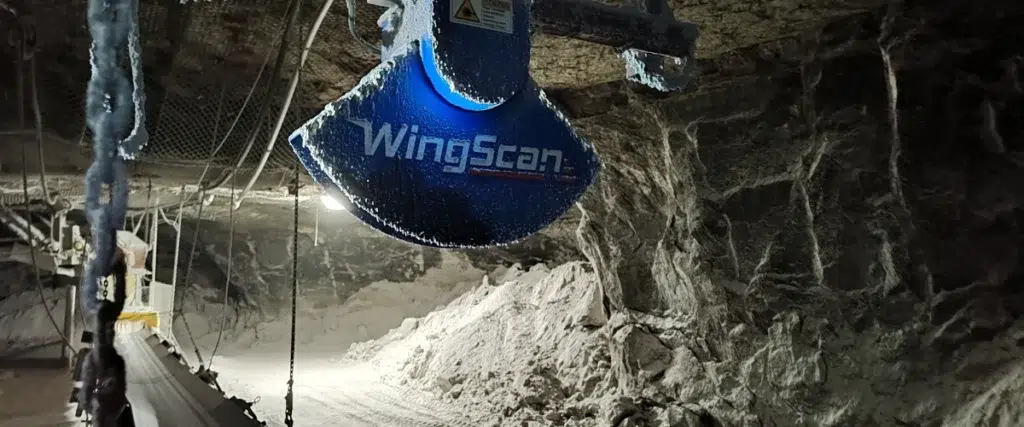
Volumetric scanning isn’t just helpful; it’s really important for mines that want to save money and run smoothly.
Interested in switching from belt scales and/or platform scales to volumetric scanning? Learn more about how scanners compare to traditional scales.
And If you’re ready to find out how much your mine could save, ask for a WingScan consultation request.
Our experts can show you exactly how fast the investment pays off. When every load and speck of material matters, don’t use inferior methods.
Choose WingScan and start saving money right away.
Mining Volumetric Scanner ROI FAQs
WingScan ROI depends on where and how material is measured. The answers below cover the savings opportunities mines ask about most often.
What is the typical ROI timeline for a mining volumetric scanner?
Does WingScan replace a mining truck scale?
Why can belt scale calibration create a large scanner ROI opportunity?
Which costs and benefits belong in a mining scanner ROI calculation?
How do moisture and bulk density affect volumetric scanner results?
How can a mine verify WingScan savings after installation?
Does scanner ROI differ between belt, truck, and rail applications?
Schedule a conversation with a Wingfield specialist!
or call 423-698-0100