Article Summary
Volumetric scanning is moving into the standards mainstream.
WingScan’s presentation at the National Conference on Weights and Measures (NCWM) showed that LiDAR-based volumetric measurement can produce auditable, defensible results in real operational conditions.
-
Proof beats hype.
Standards adoption is driven by testing, traceability, and repeatability—not marketing claims.
-
Auditability is now a hard requirement.
Compliance and inventory reporting demand defensible measurement data—especially when materials move.
-
LiDAR is converging with legal metrology.
As standards pathways progress, volumetric scanning gains clearer standing for commercial use.
THEY WERE NOT EXPECTING A PRESENTATION LIKE THIS.
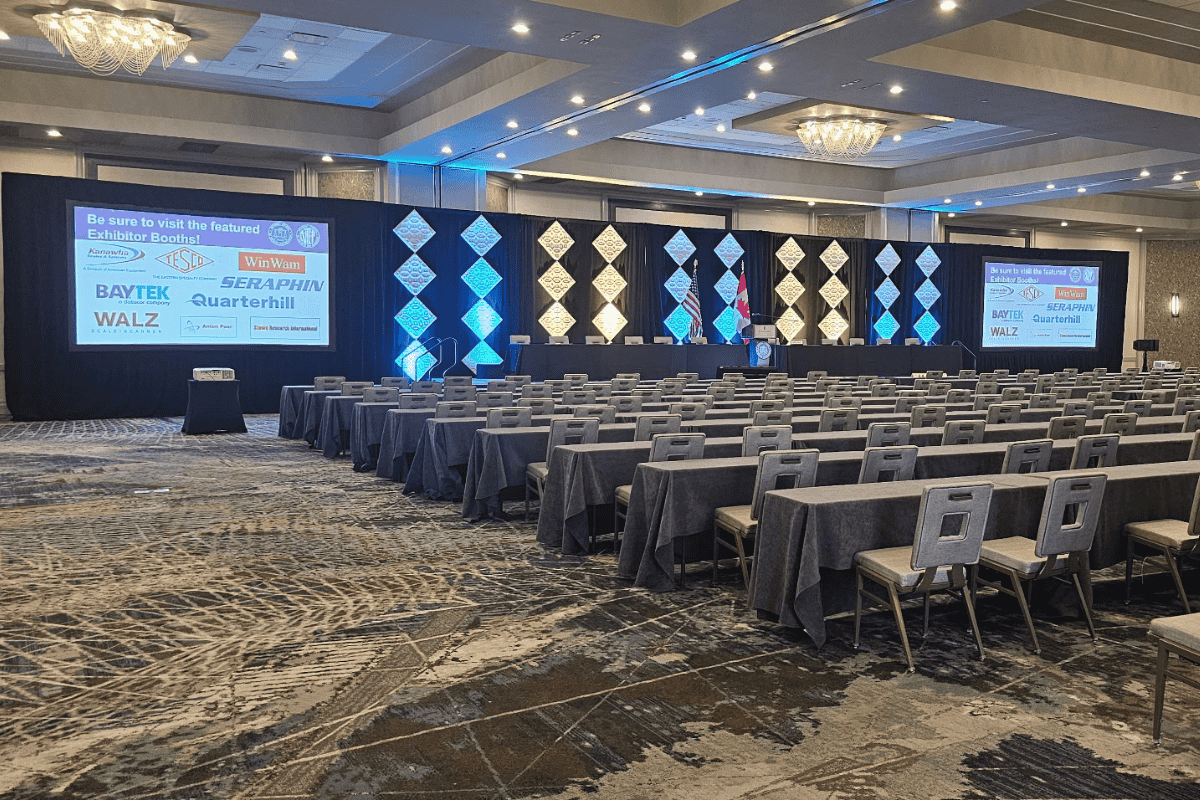
When Dan Caine stepped onto the stage at the NCWM Interim meeting in Mobile, Alabama, he revealed something they had never witnessed.
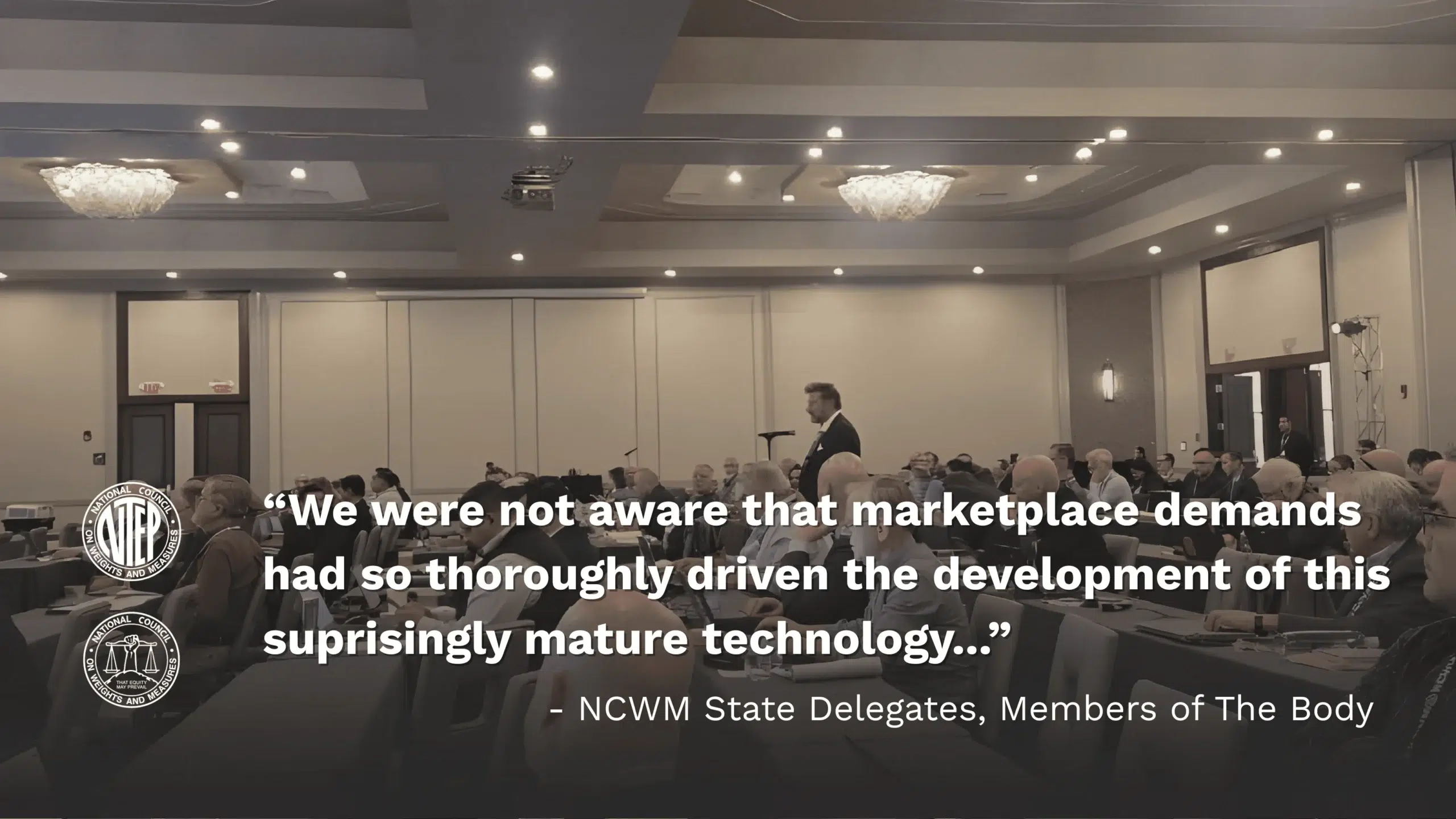
Within minutes of his presentation ending, NCWM committee members made a stunning reversal…
TheyMOVED volumetric scanning from “in development “back to “in voting” status.
The Difference Between
“Development” vs. “Voting”
Developing’ = promising but unfinished. ‘Voting’ = ready for member approval (an important step toward NIST Handbook 44).
This isn’t just progress. It’s a complete acceleration of the standards process that industry insiders thought would take years.
So what exactly did WingScan demonstrate that changed their minds?
Two things: proof that volumetric scanning isn’t experimental anymore. And evidence that the financial world has already accepted it (…even if standards bodies still actively debate it).
What WingScan Presented (And Why It Resonated)
WingScan’s presentation demonstrated that volumetric scanning has already crossed the threshold from experimental to operational.
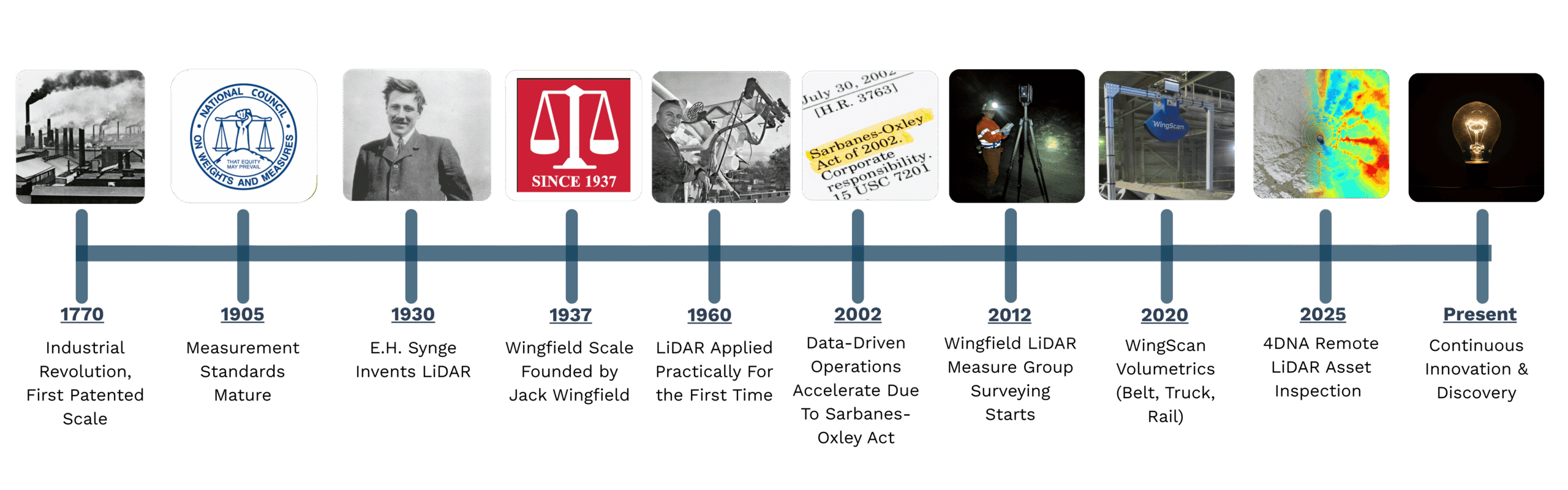
The presentation opened with a timeline that traced the evolution of measurement, from NCWM’s role in standards to the rise of LiDAR and WingScan’s real world use on belts, trucks, and rail.
It showed LiDAR not as a concept, but as a field-proven measurement method already operating at industrial scale.
But context alone doesn’t move standards committees.
What mattered was proof.
No other company has replicated how tough your testing standards were.
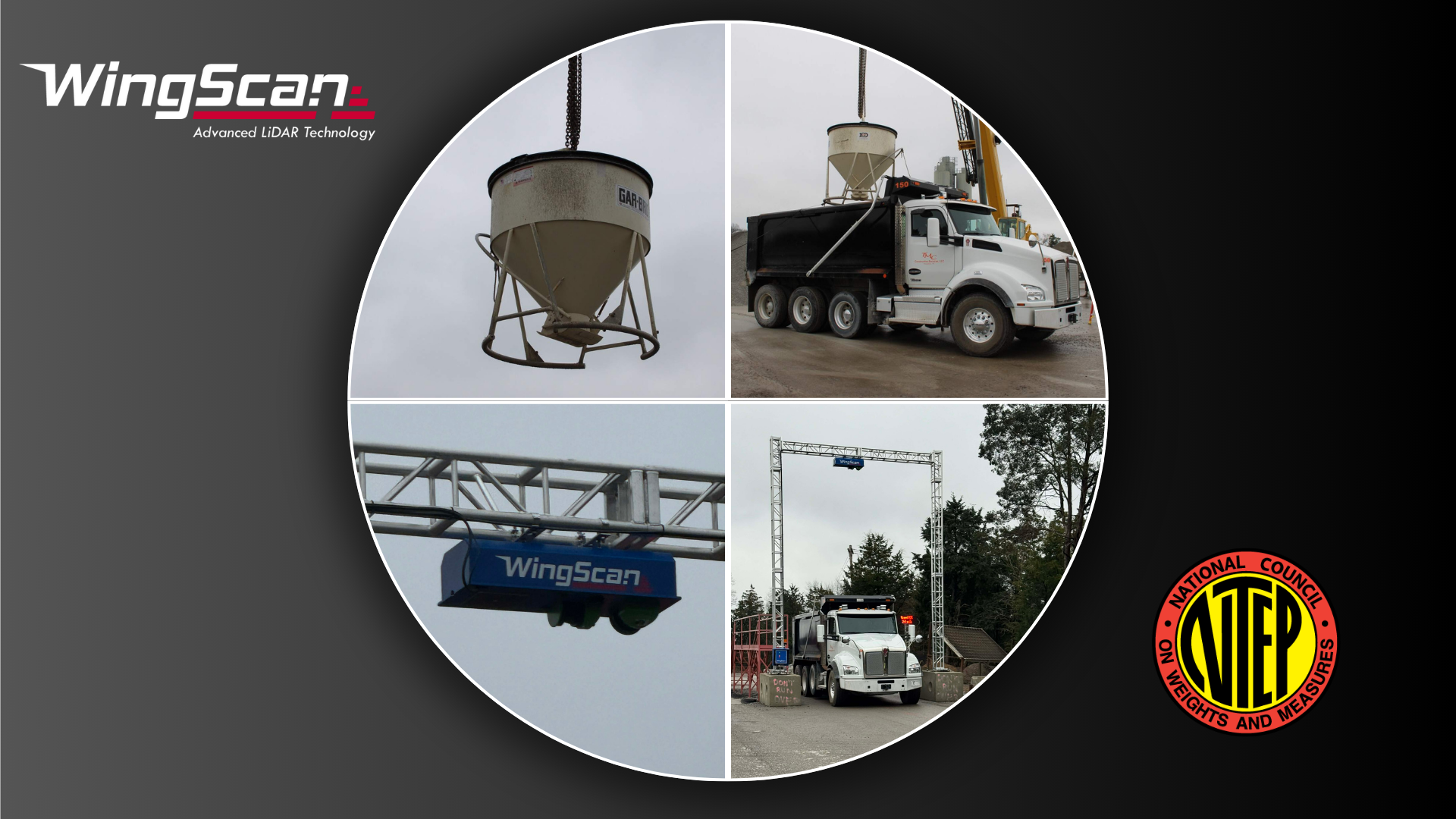
WingScan earned NTEP certification under rigorous real-world conditions. This demonstrates that volumetric scanning delivers transparent, repeatable, and defensible measurements even in challenging industrial environments.


The presentation also addressed a critical question: Why does volumetric scanning matter now?

The answer goes back to 2002, when the Sarbanes-Oxley Act introduced a new era of corporate accountability.
Companies can no longer rely on rough estimates when reporting inventory.
They need measurement methods that produce auditable, defensible data—especially when materials are constantly moving and changing.
And here’s something that surprised some attendees: top-tier financial auditing firms already recognize LiDAR volumetric measurement in their audit processes. This includes the Big Four accounting firms in the U.S.
What This Means for the Industry
NCWM is the organization that determines which measurement technologies become legally recognized standards in the United States. When a measurement method makes it into NIST Handbook 44, it becomes an officially accepted standard—the technical rulebook that state and local authorities use for commercial measurement.
For companies using volumetric scanning to measure stockpiles, truck loads, conveyor belts, or rail cars, official recognition means:
-

Legal defensibility
Your measurements hold up in disputes, audits, and regulatory reviews—because the method is formally recognized.
-
Audit acceptance
Financial auditors and compliance teams can treat LiDAR-based volumetric measurement as a legitimate, documentable method.
-
Future-proofing
Your measurement approach aligns with where standards and enforcement are heading—not where they used to be.


Authoritative references: NCWM, NIST Handbook 44 publications.
What happens next?
If the process continues successfully, volumetric scanning becomes part of the official standards handbook. This would give it the same legal standing as traditional scales and other established measurement methods.
The standards process continues with additional review and formal voting steps. WingScan will remain engaged throughout and will share updates as they develop.
For now, one thing is clear: volumetric scanning has moved from the margins to the mainstream of measurement standards. And WingScan was the company that helped make it happen.
About WingScan
WingScan, part of Wingfield Scale & Measure, provides volumetric measurement solutions for heavy industry. The company delivers precise, auditable measurements across stockpiles, conveyors, trucks, and rail applications.
To learn more about standards pathways and commercial requirements, see NTEP and NIST Handbook 44.
Interested in how WingScan Can Help Your Business?
Fill out the form below or call 423-698-0100