

Article Summary
Low-carbon cement depends on smarter clinker reduction and tighter process control.
This low carbon cement article explains how producers can reduce cement CO₂ emissions through clinker substitution, LC³ cement, emerging low-carbon cement technologies, and better real-time material measurement. It also shows how WingScan volumetric scanning helps stabilize feed ratios, improve throughput, reduce moisture-related measurement error, and support ESG reporting for modern cement decarbonization programs.
-
Clinker reduction is the biggest near-term lever.
Because clinker drives most cement emissions, strategies like LC³, limestone-rich blends, slag, fly ash, and other supplementary cementitious materials can deliver meaningful CO₂ reductions today.
-
Low-carbon cement still depends on precise blending.
Alternative formulations only perform as intended when plants maintain stable feed ratios, consistent dosing, and tight quality control across raw materials and fuels.
-
Volumetric scanning supports performance and compliance.
WingScan helps cement producers measure conveyor loads in real time, reduce drift tied to moisture and belt-scale issues, improve process efficiency, and create auditable records for ESG reporting and product documentation.
Introduction
Cement is both indispensable AND carbon-intensive.
The sector contributes roughly 7–8% of global CO₂ emissions.
This makes it one of the biggest industrial decarbonization challenges on earth.
If cement were a country, it would rank among the top global emitters according to the American Progress Organization.



Why cement’s carbon footprint is so large.
Most of cement’s emissions come from clinker…
That’s the reactive binder made by heating limestone to high temperatures.
The calcination chemistry releases CO₂, and the kiln fuel adds even more.
This clinker is responsible for 90% of cement’s emissions, according to the World Resources Institute and the World Economic Forum.

So what can the cement industry actually do about this massive carbon challenge? Let’s examine the solutions that are working today—and what’s coming next.

Emerging solutions for low-carbon cement (and what’s real today)
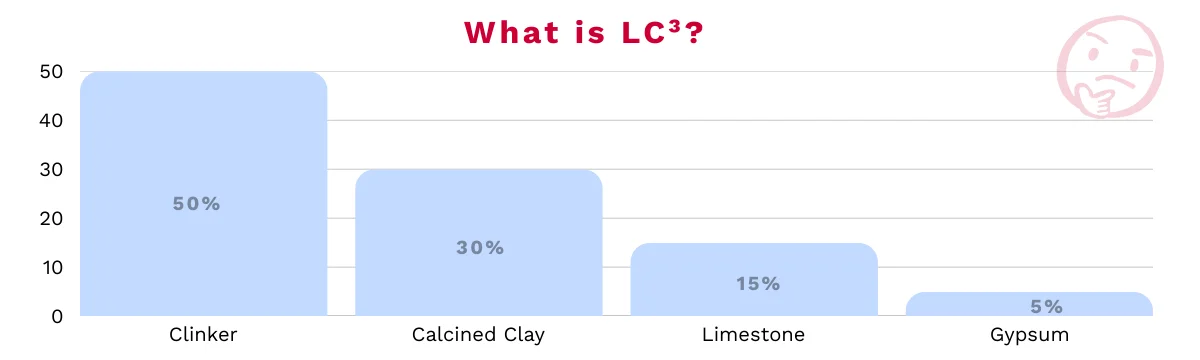
LC³ (limestone + calcined clay)
 Clinker ↓ up to 50%
 CO₂ ↓ ≈40%
This innovation, called “LC³”, blends clinker with calcined clay and ground limestone—enabling up to half the clinker to be replaced and cut CO₂ as much as ~40% while meeting performance specs. Learn more at lc3.ch.
It also needs lower process heat than clinker, further shrinking fuel emissions.
- Qualify feedstocks & curing regimes; control fineness and sulfate balance for performance.
- Document results to accelerate standards acceptance and EPDs.
Novel chemistries & electrification
 EAF “recycled”
 Electrochemical (CO₂-free)
 Biogenic limestone
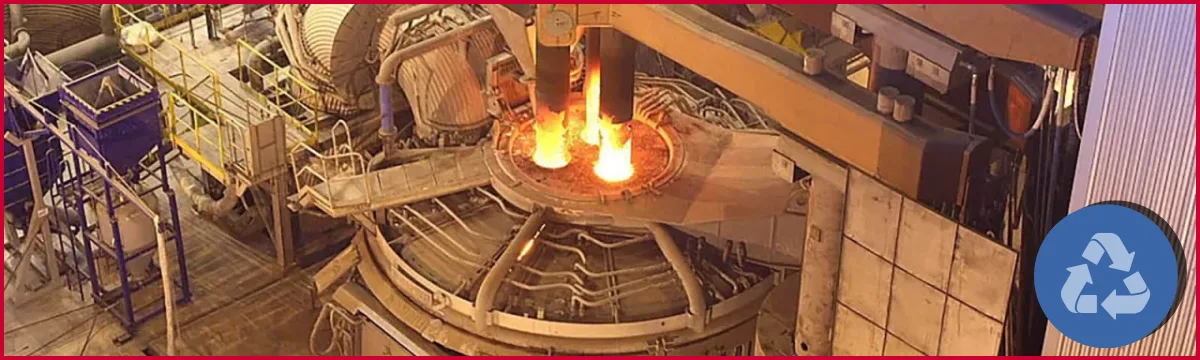
- Electrified “recycled” cement (Cambridge Electric Cement): replaces the lime flux in a steel electric-arc furnace (EAF) with recovered cement paste from demolished concrete—yielding a clinker-like slag that can be ground into new cement. Cambridge Enterprise case study.
- Electrochemical cement (Sublime Systems): uses a CO₂-free electrochemical process to form clinker-like phases without fossil kilns; a 30,000 t/yr commercial plant is slated in Massachusetts. MIT News story.
- Biogenic/algae-based limestone (Prometheus Materials): grows limestone precursors via microalgae biomineralization—avoiding quarrying and high-heat calcination while storing carbon in the final product. How it works.
Industrial momentum & scaling
- Industrial momentum (Argos): calcined-clay line at the Rioclaro, Colombia plant reported ~30% energy savings and up to ~38–50% CO₂ reduction. World Cement.
- Scaling examples (Heidelberg & partners): commissioning what’s described as the world’s largest LC³/calcined-clay facility in Ghana (~400,000 t/yr), targeting up to 40% product CO₂ reduction. Global Cement.
- Success depends on feedstock supply chains, standards/spec updates, and rigorous QC/QA.

But, there’s something most cement producers miss.
There’s an extremely critical factor that determines your success with ANY low-carbon cement strategy:
The Overlooked Win: How To Make Low Carbon Cement More Efficient NOW
 WHERE WINGSCAN VOLUMETRIC SCANNING SYSTEMS FIT INTO LOW-CARBON CEMENT PRODUCTION.
 WHERE WINGSCAN VOLUMETRIC SCANNING SYSTEMS FIT INTO LOW-CARBON CEMENT PRODUCTION.
Innovations like LC³, electrified cement, and other low-carbon cement solutions promise large emissions reductions.
But, here’s the thing:
These solutions only work when you blend the raw materials and fuels needed to create them with absolute precision.
Without stable feed ratios, quality control is compromised.
See how Heidelberg Materials identified inconsistent material feeds in our cement measurement case study.
WingScan’s novel measurement technology enables you to have precision dosing, so you can confidently adopt low-carbon cement without giving up on quality.
Let’s explore how WingScan optimizes low-carbon cement production:


WINGSCAN TECHNOLOGY DRIVES LOW-CARBON CEMENT PRODUCTION
 WINGSCAN TECHNOLOGY DRIVES LOW-CARBON CEMENT PRODUCTION
WingScan reliably measures material volumes directly in real-time on your conveyor belts using advanced LiDAR technology.
This means giving your operators essential dosing data that eliminates gravimetric guesswork that error-prone belt scales cause.
Plus, it makes it possible to blend LC³, Type IT, and other low‑carbon cement components with the precision needed to achieve their promised emissions reductions.
Substitute Clinker With Confidence
 Substitute Clinker With Confidence
 Stable feed ratios unlock 20–40% cuts:
High replacement mixes using calcined clay, limestone, slag, and fly ash require accurate and repeatable dosing
By stabilizing feed ratios, WingScan enables LC³/SCM strategies that cut carbon by 20–40% without sacrificing production and performance.
World Cement special report

Precision belt scanning improves efficiency
 Precision belt scanning improves efficiency
Keep your material flowing like a river of gold.
WingScan’s non‑contact sensors measure volume on the belt (…without constant calibration).
Why does this matter when it comes to low-carbon cement?
It improves your throughput and process efficiency.
Improved throughput and process efficiency mean less energy per ton, less CO₂ per ton, and lower costs for low-carbon cement over time.
MOISTURE VARIANCE: THE HIDDEN MIX DISRUPTOR
 MOISTURE VARIANCE: THE HIDDEN MIX DISRUPTOR
Weight‑based systems like belt scales misread water as material because they don’t have a way to distinguish between the two.
Moisture readings create invalid measurements that adversely affect your mix formula.
Volume is the more valid measurement because it ignores the moisture variable.
Valid measurements are vital for true low carbon cement.


Data for ESG reporting & compliance
 Data for ESG reporting & compliance
Show your carbon savings with historical data that doesn’t lie:
WingScan automatically logs time‑stamped volume data for every load.
It creates auditable records that support Environmental Product Declarations and ESG reporting, so you can achieve moral obligations and goals (beyond financial reasons)



WingScan represents the future of sustainable cement production. Its ability to optimize alternative materials while ensuring consistent strength parameters is unprecedented in our industry.
Ready to put this into action? Here’s your step-by-step roadmap to start cutting carbon emissions in the next 6–24 months:
How To Build A Practical Low-Carbon Cement Roadmap To Transform Your Operation (Next 6–24 Months)

Step 1 — Maximize clinker substitution the smart way
- Pilot LC³ (limestone calcined clay cement) / limestone-rich blends where clay/limestone supply is viable; target 20–40% CO₂ cuts vs. baseline OPC.
- Pair with WingScan to keep real-time feed variability low while monitoring strength KPI stability; this de-risks higher substitution rates.

Step 2 — Prepare For Next-Gen Chemistries
- Track pilots in electrified/EAF recycled cement and electrochemical cement; evaluate where they slot into regional portfolios as standards evolve.
- Deploy WingScan now to build the precision measurement foundation these advanced chemistries will require for consistent quality.

Step 3 - Build operational excellence for any low-carbon cement strategy
- Establish verifiable measurement protocols and data logging for ESG reporting and product certification across all low-carbon formulations.
- Replace drift-prone belt scales with WingScan to ensure feed ratio consistency regardless of cement chemistry (current or future).
Before we wrap up, let’s address the most common questions cement producers have about low-carbon strategies:
FAQ: Low-carbon cement essentials
What CO2 reduction is realistic today without new kilns?
20–40% per ton of cement via clinker substitution (e.g., LC³), coupled with operational efficiency (logistics, calibration-free measurement, real-time mass balance).
Does volumetric scanning replace your traditional belt scales and weighbridges?
On critical lines, yes—plants adopt WingScan to avoid drift and downtime. In other cases, plants combine volumetrics + weight to derive real-time densities.
Will buyers care about low-carbon cement?
Low-carbon procurement policies and EPD requirements are rising across public and private projects; verifiable mix and logistics data help you win spec-driven work. (See GCCA/IEA roadmaps for policy direction.)
Final word: Pair Low-carbon Cement With Smarter Operations.
LC³, electrified cement, and algae-derived limestone are moving from pilot to scale.
But digital, real-time volumetric control is a lever today that reduces CO₂, costs, and headaches—and makes tomorrow’s low-carbon cement formulas easier to run at spec.
Cement producers who combine material innovation with WingScan-enabled optimization will lead the transition to low-carbon cement—profitably.
Ready to upgrade your cement operation with real-time volumetric scanning?
Click the button below and get a FREE consultation.
Schedule a conversation with a Wingfield specialist!
or call 423-698-0100